

Yes, you can pay for super visa insurance monthly. Immigration, Refugees and Citizenship Canada (IRCC) states that the policy must “be paid in full or in instalments with a deposit (quotes aren’t accepted)”, so a monthly-payment plan is compliant as long as the full 365-day policy has actually been issued and the deposit has been paid before the applicant enters Canada. What fails is not the instalment structure. What fails is submitting a quote instead of an issued policy.
The bigger 2026 news sits on the other side of the application. On March 31, 2026, IRCC changed how the host’s minimum income is calculated. A host may now qualify using either of the two taxation years preceding the application, and where the host reaches at least 75% of the required amount, the visiting parents’ or grandparents’ own income can be added to close the gap. Most super visa articles still describe the old single-year test.
This page is information only. Lawverra does not sell insurance, does not broker policies, and is not affiliated with any insurer, comparison site or brokerage. Every premium figure below comes from a named commercial source and is labelled as an estimate with the date of the data.
| Item | Requirement or figure |
|---|---|
| Minimum emergency medical coverage | $100,000 |
| Minimum policy term | 1 year from the date of entry (not 5 years) |
| Payment method accepted | Paid in full, or in instalments with a deposit. Quotes are not accepted |
| Who may issue the policy | A Canadian insurance company, or a foreign company meeting the three-part OSFI test |
| Host minimum income, family of 3 | $46,720 (IRCC table updated July 29, 2025) |
| New income-calculation routes | Effective March 31, 2026 |
| Authorized stay per entry | Normally 5 years, fixed by the officer at the port of entry |
| Visa validity | Passport validity less one month, up to 10 years |
| Processing service standard | 112 days (outland) |

The seven conditions an IRCC-compliant super visa policy must meet
IRCC sets out the medical insurance conditions as a short list on its super visa documents page, last modified July 30, 2026. The policy must:
- “include the insurance company name that issued the policy”
- “be valid for a minimum of 1 year from the date of entry”
- “be paid in full or in instalments with a deposit (quotes aren’t accepted)”
- “cover the applicant’s health care, hospitalization and repatriation”
- “provide a minimum emergency coverage of $100,000”
- “be valid for each entry to Canada”
- “be available for review by the border services officers on request”
Two details are widely misread. The $100,000 floor is emergency medical coverage, so a policy with a large aggregate limit but a small emergency medical sub-limit does not qualify. And IRCC sets no maximum deductible, so a high-deductible policy is compliant, though it raises out-of-pocket cost per claim.
The eligibility page adds who may issue the coverage: a Canadian insurance company, or “a company outside Canada that has been approved by the minister.” That second route is narrower than it sounds, and is dealt with in its own section below.
Why a quote is not a policy, and what the confirmation must show
“be paid in full or in instalments with a deposit (quotes aren’t accepted)”
That parenthesis carries most of the insurance-side refusal risk on a super visa file. Practitioners report that submitting a quote or an unfunded application, rather than an issued policy, is the single most common insurance-related cause of refusal. A quote is a price. It creates no coverage, names no policy number, and can be withdrawn.
On an instalment plan, the document to submit is the confirmation of coverage or the policy itself, issued after the deposit clears. Based on the IRCC bullets, the confirmation needs to show, on its face:
- the name of the insurance company or underwriter that issued the policy
- the emergency medical coverage amount, at least $100,000
- a validity period of at least 365 days running from the intended date of entry
- that health care, hospitalization and repatriation are all covered
- the insured person’s name, matching the passport exactly
- evidence that the deposit or first instalment has been paid
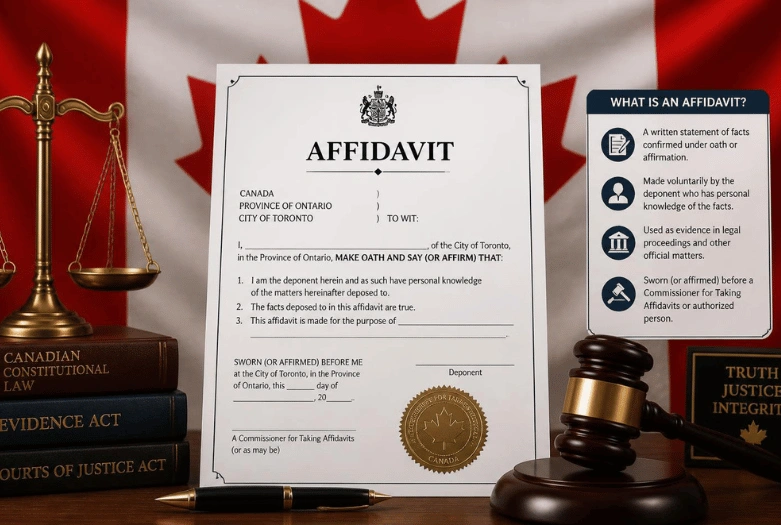
IRCC does not publish a prescribed template or a mandated field list for that confirmation letter beyond the bullets above, so no one can honestly tell you there is an official format. What can be said is that a confirmation missing any of those elements gives an officer a reason to ask for more, and a request for more is delay at best. Where an applicant needs to attest to something the paperwork does not show, a sworn statement in the form of an affidavit is the usual instrument, though it does not substitute for the policy itself.
What changed on March 31, 2026: two new routes to meet the host income test
This is the most consequential super visa change of 2026, and it has nothing to do with insurance. It changes who can sponsor a parent or grandparent at all. IRCC published the notice on March 20, 2026, with effect from March 31, 2026.
Route one: either of the two preceding taxation years
The host, and a co-signer if there is one, may now demonstrate the minimum income in either of the two taxation years preceding the application, rather than only the most recent year. A host who had a strong 2024 and a weak 2025 is no longer automatically out. Parental leave, a job change, a business loss year or a short illness in the most recent tax year no longer sinks the file on its own.
Route two: the 75% rule and the visitors’ own income
Where the host meets at least 75% of the required amount, the income of the visiting parents or grandparents can be counted toward the shortfall. For a family of four, the threshold is $56,724, so a host at 75% needs $42,543 and the parents’ own income can cover the remaining amount. Retired parents with pension income, rental income or a business abroad are now directly relevant to the calculation.
The notice states the change applies to “all applications already in processing, or submitted on or after” March 31, 2026. That retroactive reach matters: a file sitting in a queue since 2025 is assessed under the new calculation, not the one in force when it was filed.
The 2026 minimum income table and who counts in the family size
The thresholds themselves did not move in 2026. IRCC’s host financial support page still carries the table updated July 29, 2025, and it remains current as at September 2026.
| Family size | Minimum income (CAD) | 75% figure under the March 2026 rule |
|---|---|---|
| 1 | $30,526 | $22,895 |
| 2 | $38,002 | $28,502 |
| 3 | $46,720 | $35,040 |
| 4 | $56,724 | $42,543 |
| 5 | $64,336 | $48,252 |
| 6 | $72,560 | $54,420 |
| 7 | $80,784 | $60,588 |
| Each additional person | + $8,224 | + $6,168 |
Family size is counted more broadly than most people expect. It includes the applicants being supported, the host, the host’s spouse or common-law partner including a separated spouse, the dependent children of both, any previously approved super visa applicants still covered by an active letter of invitation, and anyone the host or co-signer previously sponsored whose undertaking is still in effect. Getting this count wrong is a quiet way to fall below the threshold. Whether a partner meets the statutory definition of a common-law relationship can therefore change the required income by thousands of dollars.
For proof of income, a Canada Revenue Agency Notice of Assessment is the preferred document. Alternatives include T4 or T1 slips, twelve months of pay stubs, an employer letter stating salary, bank statements, and proof of pension or rental income. Relationship documents such as an Ontario marriage certificate or a birth certificate are what establish the family link between host and applicant.
How monthly plans are structured, and what the instalments really cost
The dominant structure in the Canadian market is a ten-pay plan: a down payment equal to roughly two months of premium at purchase, then about ten monthly instalments. Some carriers offer a four-pay alternative. The policy issued is a full 365-day policy from the effective date. Paying monthly does not shorten the coverage period and does not reduce the $100,000 limit.
A monthly plan is not a monthly policy. The insurer has issued twelve months of coverage and is financing the premium, much as an insurer finances an annual general liability policy paid in twelve payments. IRCC’s condition is about the policy term, not the payment schedule.
Down payments and admin fees by provider
Instalment plans are not free. Every provider charges a one-time setup fee, a per-instalment fee, or both. The figures below are published provider terms gathered September 2026, and they change without notice.
| Provider | Down payment | Setup or admin fee |
|---|---|---|
| 21st Century | 2-month deposit | $50 |
| Travelance | 2 months’ premium | $100 |
| RIMI Secure Travel | 1st month premium | $120 |
| Destination Canada | 2-month deposit | $10 plus $10 per month |
| Goose | 2 monthly payments | $12 instalment fee included in each payment |
A worked example of the financing load
Take the Goose-style structure, where a $12 fee is built into each instalment. Across ten to twelve payments that is roughly $100 to $144 a year in pure financing cost. Add a one-time setup fee, which ranges from $10 to $120 across the providers above, and an applicant paying monthly is spending in the region of $110 to $264 more than the same person paying the annual premium up front.
Set against a mid-market annual premium of about $1,400 for a 65-year-old, that is an effective surcharge of roughly 8% to 19% for the convenience of spreading the cost. Whether that is worth paying is a cash-flow decision, not a compliance one. IRCC treats both routes identically.
Sample instalment figures at age 65
| Plan | Initial payment | Monthly thereafter |
|---|---|---|
| TruStone Health | $321.56 | $135.78 |
| RIMI Secure Travel | $390.10 | $135.05 |
| 21st Century Basic | $351.13 | $150.56 |
| Travelance Premier | $432.76 | $166.38 |
| Destination Canada | $356.75 | $183.38 |
| 21st Century Standard | $490.43 | $220.22 |
Premium estimates by age, and what moves the price
There is no government price list for super visa insurance. Every figure in this section is a commercial estimate published by a broker or comparison site, given with the date of the data, and an individual quote will differ.
| Insurer plan | Age 55 | Age 65 | Age 75 |
|---|---|---|---|
| BestQuote MedEC | $1,000.10 | $1,332.25 | $2,701.00 |
| RIMI Secure Travel | $1,026.00 | $1,620.60 | $2,920.00 |
| MSH Discover Canada Essential | $1,306.70 | $1,412.55 | $2,711.95 |
| Travelance Essential | $1,328.60 | $1,996.55 | $4,686.60 |
| JF Insurance Royal Visitors | $1,295.75 | $1,949.10 | $3,325.15 |
| Travel Shield (Starr) | $1,335.90 | $1,985.60 | $3,427.35 |
| TruStone Health (HMC) | $1,339.55 | $1,515.60 | $2,736.00 |
| 21st Century Basic | $1,387.00 | $1,806.75 | $3,347.05 |
| Destination Canada | $1,452.70 | $2,080.50 | $3,551.45 |
| 21st Century Standard | $1,752.00 | $2,642.60 | $4,854.50 |
| Manulife Plan A | $1,969.91 | $2,613.77 | $4,932.43 |
The spread within a single age is the striking part. At 65 the same coverage runs from $1,332 to $2,614, roughly double, from insurers all writing an IRCC-compliant $100,000 policy. Comparing three or four carriers is worth more than any other cost-saving step on this list.
A second publisher, SuperVisaQuote, gives monthly and annual bands by age and labels them explicitly as illustrative estimates rather than quotes.
| Age band | Illustrative monthly | Illustrative annual |
|---|---|---|
| 45 to 59 | $55 to $95 | $660 to $1,140 |
| 60 to 69 | $85 to $170 | $1,020 to $2,040 |
| 70 to 79 | $135 to $290 | $1,620 to $3,480 |
| 80 to 84 | $235 to $400 | $2,820 to $4,800 |
| 85 and over | $300 to $520 | $3,600 to $6,240 |
Deductibles
Raising the deductible is the fastest legitimate way to cut the premium, and it does not affect compliance because IRCC sets no deductible ceiling. BestQuote’s deductible guidance, one broker’s read rather than an industry standard, puts the saving at roughly 10% to 12% at $500, 18% to 22% at $1,000, 28% to 32% at $2,500, and 33% to 38% at $5,000. The trade is direct: a $5,000 deductible means the family pays the first $5,000 of any emergency.
Pre-existing conditions and stability periods
Adding coverage for stable pre-existing conditions raises the premium materially, and the multiplier widens with age. On the BestQuote data the increase is roughly 17% at age 55, about 45% at 65, and 37% to 83% at 75. At the expensive end of the market a 75-year-old moves from $4,932 to $9,910 for the same $100,000 limit.
Whether a condition counts as stable turns on the policy’s stability period, a defined window before the effective date during which there must have been no change in the condition, its medication or its treatment. Common periods are 90 or 180 days, but the exact length varies by carrier and there is no universal figure, so the wording in the specific policy is what governs. Like any insurance contract, the exclusions clause decides the claim, which is equally true of professional liability policies and every other line of coverage.
Misstating medical history to secure a lower premium is a poor trade. It gives the insurer grounds to deny the claim at the moment coverage is needed, and misrepresentation on an immigration document carries its own consequences.
The foreign insurer rule is a three-part OSFI test, not a published list
Since January 28, 2025, policies from insurers outside Canada can satisfy the super visa requirement. A persistent myth has grown up around this change: that IRCC published a roster of approved or designated foreign insurers. It did not. There is no such list, and any page presenting one is not quoting IRCC.
What the January 2025 notice did was replace designation-by-name with a three-part test. A foreign policy qualifies only where all three are true:
- it is “issued by a foreign insurance company authorized by the Office of the Superintendent of Financial Institutions (OSFI) to provide accident and sickness insurance”
- the company appears “on OSFI’s list of federally regulated financial institutions”
- the policy is “issued under the company’s insurance business in Canada”
The third condition is the one that disqualifies most offshore policies. It is not enough for the insurer to be a large, solvent, well-known company in the applicant’s home country. The policy must be written through that company’s OSFI-authorized Canadian branch. A purely domestic policy from an insurer in India, Pakistan or anywhere else, with no OSFI authorization, does not qualify no matter how good the coverage is.
The verification step is the same for everyone: check the company against OSFI’s register of federally regulated financial institutions before buying, and get written confirmation that the policy is issued under its Canadian insurance business. Compliance here is federal, through IRCC and OSFI. Provincial insurance regulators do not decide whether a super visa policy qualifies.
What happens if a monthly payment is missed
The policy lapses. In the words of one carrier’s published terms, once the policy lapses “the coverage for medical treatment, hospitalization, or emergency expenses incurred after that date will no longer be covered.” A lapse partway through a visit leaves the visitor uninsured in a country where an emergency admission can run into six figures, and out of compliance with the condition attached to the super visa.
Here is the honest limit of what is known. These lapse consequences are insurer contract terms, not IRCC policy. IRCC publishes no guidance on missed instalments, and canada.ca does not spell out an enforcement consequence for insurance that lapses mid-stay, as distinct from insurance that is not valid at entry. Anyone telling you that IRCC automatically revokes status for a missed payment is stating something the department has not published.
Two practical constraints are worth knowing before signing up. Payments cannot generally be paused to match a delayed arrival date: Goose Insurance states it “cannot wait until their arrival date to resume the monthly payments under any circumstances.” And once a claim has been made, “there is no provision for the stopping of premium payments and no refunds are provided.” The remaining instalments become a debt owed regardless of what happens next.
Refunds, cancellations, and what happens if the visa is refused
Refund treatment is set by the policy contract, not by IRCC, and it varies by carrier. The pattern across the market in 2026 looks like this.
| Situation | Typical treatment |
|---|---|
| Visa refused | Refund of premium, on documentary proof of the refusal, less a non-refundable admin fee. Goose charges $50 |
| Instalment or setup fees already paid | Normally non-refundable, including on visa refusal |
| Cancelled within the free-look window | Full refund within 10 days if no travel occurred and the visa was not denied |
| Cancelled before the effective date, not visa-related | Refund less admin fee. Goose retains a $225 minimum premium plus $50 admin; other carriers charge $150 to $250 |
| Early departure, no claim filed | Pro-rata refund of the unused portion, less roughly $25 to $50 admin |
| Any claim filed, however small | Refund eligibility is normally void entirely |
The instalment-fee point catches families out. A refusal usually returns the premium but not the financing fees, so the cost of choosing monthly payments is sunk either way. Disputed refunds normally sit within the monetary limit of Small Claims Court in Ontario, and many insurers will engage in mediation first.
One year of coverage, five years of stay, and the trap at the border
The insurance requirement is one year from the date of entry. It is not five years, and there is no obligation to buy five years of coverage up front. That misconception costs families thousands of dollars in premium they were never required to spend.
The length of stay is a separate matter. Under the Ministerial Instructions issued under section 15(4) of the immigration legislation and effective July 4, 2022, the visa itself is a multiple-entry temporary resident visa valid for “the duration of the validity period of the applicant’s passport less one month, up to a maximum duration of ten years”, and at the port of entry “the examining officer should normally fix the period of authorized stay as five years.” The extension from two years to five was announced on June 7, 2022, and IRCC’s length of stay page uses June 22, 2023 as the operative cutoff for the five-year entitlement.
“Valid for each entry to Canada”
This is where the one-year policy and the ten-year visa collide. The insurance must be valid for each entry, and must “be available for review by the border services officers on request.” A parent who buys one year of coverage, returns home after eleven months, and flies back two years later on the same visa needs a fresh, current, compliant policy on that second arrival.
A Canada Border Services Agency officer can refuse entry to a super visa holder who cannot produce valid coverage, even though the visa in the passport is still live. A valid visa is permission to seek entry, not a guarantee of it, in much the same way that a Canadian crossing into the United States is admitted at the officer’s discretion. Being turned around at the border is not the same as removal from Canada, but it is an expensive and distressing outcome that a printed policy in the carry-on prevents.
Families planning a multi-year stay often use the time to put a power of attorney for property and a personal directive for health care in place, so a parent’s affairs can be managed if capacity becomes an issue in Canada.
Insurance-linked refusal reasons, and what the official data shows
IRCC’s Report to Parliament on the Super Visa Income Requirement, published October 1, 2024, states that refusals “are primarily due to not providing the required documentation, such as the host not demonstrating that they meet the necessary income requirements, not holding the required health insurance policy, and not being able to demonstrate an intent to leave Canada.”
The same report gives the historical outcomes for 2011 to 2023: 341,538 applications received, 267,740 approved at 78%, 61,930 refused at 18%, and 11,868 withdrawn at 3%. Roughly four in five applications succeed, and documentation, not merit, is what sinks most of the rest.
| Insurance-related trigger | Why it fails |
|---|---|
| A quote or application instead of an issued policy | Explicitly excluded by the IRCC wording. The most commonly reported cause |
| Coverage below $100,000 | Falls under the stated emergency medical minimum |
| Term shorter than 365 days from intended entry | Fails the one-year-from-entry condition |
| Policy omits repatriation | Health care and hospitalization alone are insufficient |
| Ineligible insurer | Not Canadian, and not OSFI-authorized writing in Canada |
| No proof the deposit was paid | An instalment policy needs evidence the first payment cleared |
| Effective date not aligned to planned entry | Coverage gap at the moment of arrival |
| Name mismatch with the passport | Officer cannot tie the policy to the applicant |
A checklist before buying
- Compare at least three carriers. The spread at the same age can be close to double.
- Confirm the insurer is Canadian, or verify it on the OSFI register and confirm the policy is issued under its Canadian insurance business.
- Pay the deposit and obtain the issued policy, not a quote, with an effective date matched to the realistic arrival date.
- Check the certificate names the underwriter, states $100,000 or more emergency medical coverage, runs 365 days, lists repatriation, and matches the passport name exactly.
- Read the cancellation and instalment-fee clauses before paying.
- Carry a printed copy for the border services officer, on this entry and every later one.
Program context and processing times in 2026
An IRCC committee briefing dated March 23, 2026 records roughly 52,900 super visas issued in 2025, and confirms that no cap or intake limit applies to the super visa. It is demand-driven, which is the structural reason many families use it instead of waiting for the Parents and Grandparents Program.
The contrast is stark. PGP admission targets are 15,000 for each of 2026, 2027 and 2028. At January 31, 2026 about 48,400 applications were pending outside Quebec at 23-month processing, and about 12,100 in Quebec at 46-month processing. IRCC “most recently accepted new applications in the fall 2025, and is not currently accepting new applications.”
| Country | July 2, 2026 snapshot | August 26, 2026 snapshot |
|---|---|---|
| India | 50 days | 61 days |
| Philippines | 52 days | 104 days |
| Pakistan | 102 days | 162 days |
| United States | 123 days | 123 days |
| Nigeria | Not reported | 55 days |
Volatility is high, as the Philippines and Pakistan columns show. Check IRCC’s live processing times tool on the day of filing, and set the policy effective date to a realistic arrival date rather than an optimistic one.
Frequently asked questions
Does IRCC accept monthly payment super visa insurance?
Yes. IRCC’s documents page states the policy must “be paid in full or in instalments with a deposit (quotes aren’t accepted)”. A monthly plan is compliant provided the full 365-day policy has been issued and the deposit or first instalment has been paid before entry. The payment schedule is not what officers assess. The issued policy is.
Why is a quote rejected when it shows the same coverage?
Because a quote creates no coverage. It is a price offer that can be withdrawn, carries no policy number and binds no insurer, and IRCC excludes quotes in express words. Practitioners report it as the most common insurance-related cause of super visa refusal, and it is entirely avoidable by paying the deposit first.
How much coverage is required?
A minimum of $100,000 in emergency medical coverage, and the policy must cover health care, hospitalization and repatriation. The $100,000 is an emergency medical floor rather than a general coverage figure, so check the emergency medical sub-limit and not just the headline number on the certificate.
Do I need to buy five years of insurance for a five-year stay?
No. The requirement is coverage valid for at least one year from the date of entry. There is no obligation to purchase five years up front, and buying it is a substantial and unnecessary expense. The separate requirement is that coverage must be valid for each entry, so a later re-entry on the same visa needs a current policy at that time.
What changed about the income requirement in 2026?
Effective March 31, 2026, hosts may meet the minimum income in either of the two taxation years preceding the application, and where the host reaches at least 75% of the required amount, the visiting parents’ or grandparents’ own income can cover the shortfall. IRCC applied the change to applications already in processing as well as new ones.
Is there an official list of approved foreign insurers?
No. IRCC never published a roster of designated foreign insurers. Since January 28, 2025 a foreign policy qualifies only if the company is OSFI-authorized for accident and sickness insurance, appears on OSFI’s list of federally regulated financial institutions, and issues the policy under its insurance business in Canada. Verify the company on the OSFI register before buying.
Can I buy a policy from an insurer in my home country?
Only if that insurer writes the policy through an OSFI-authorized Canadian branch. The third condition, that the policy be issued under the company’s insurance business in Canada, disqualifies most purely domestic policies from abroad regardless of the insurer’s size or reputation. Confirm this in writing with the insurer before paying anything.
What happens if I miss a monthly instalment?
The policy lapses, and expenses incurred after the lapse date are not covered. That consequence comes from the insurer’s contract, not from IRCC. IRCC publishes no guidance on missed instalments, and canada.ca does not state an enforcement consequence for a lapse occurring mid-stay. Setting up automatic payment from a Canadian account avoids the problem entirely.
How much more does paying monthly cost?
Roughly $110 to $264 a year on the published 2026 terms, combining per-instalment fees of about $12 and one-time setup fees between $10 and $120 depending on provider. Against a mid-market annual premium near $1,400 at age 65, that is an effective surcharge of about 8% to 19%. Paying annually is always cheaper.
Will I get a refund if the visa is refused?
Usually yes, on documentary proof of the refusal, but less a non-refundable admin fee that runs to about $50 with some carriers. Instalment and setup fees already paid are normally not refunded even on refusal. Refund terms are set by the policy contract, so read the cancellation clause before buying rather than after.
Does a higher deductible affect IRCC compliance?
No. IRCC sets no maximum deductible, so a $5,000-deductible policy meets the requirement as readily as a $0-deductible one. One broker puts the premium saving at roughly 33% to 38% at $5,000. The trade-off is out-of-pocket exposure: the family pays the deductible on every claim before the insurer contributes anything.
Who counts in the family size for the income test?
The applicants being supported, the host, the host’s spouse or common-law partner including a separated spouse, the dependent children of both, any previously approved super visa applicants still under an active letter of invitation, and anyone the host or co-signer previously sponsored whose undertaking remains in effect. Undercounting is a common and avoidable error.
How long does a super visa take to process in 2026?
The service standard is 112 days, but actual times swing widely by country. An August 26, 2026 snapshot showed 55 days for Nigeria, 61 for India, 104 for the Philippines, 123 for the United States and 162 for Pakistan. Check IRCC’s live processing times tool on the day of filing rather than relying on any published figure.
Disclaimer and sources
This page provides general legal and procedural information about the super visa insurance requirement in Canada. It is not legal advice, not insurance advice, and not a substitute for advice about a particular file. Lawverra does not sell insurance and is not affiliated with any insurer, broker or comparison site named here. Premiums, fees and refund terms change without notice, and the policy wording governs in every case.
Last reviewed: September 2026. Primary sources checked: the IRCC super visa eligibility and documents pages (last modified July 30, 2026), the IRCC host financial support table (updated July 29, 2025), the IRCC notices of March 20, 2026 and January 28, 2025, the Ministerial Instructions effective July 4, 2022, the Report to Parliament on the Super Visa Income Requirement of October 1, 2024, the IRCC family reunification briefing of March 23, 2026, and the OSFI register of federally regulated financial institutions. Pricing comes from BestQuote Travel Insurance, PolicyAdvisor, SuperVisaQuote and Goose Insurance, all commercial publishers, and is labelled as estimates throughout.