

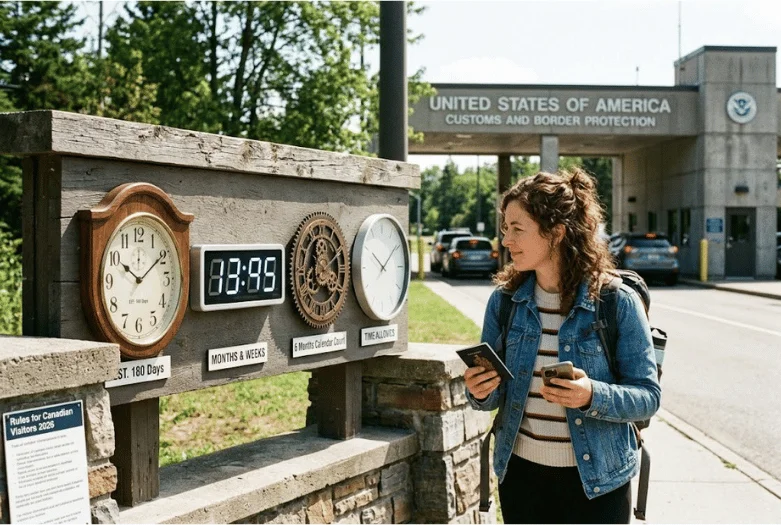
Six months per entry is the usual answer, but it is only part of the picture. A border officer decides how long you may stay. Separate rules set by the US Internal Revenue Service, by USCIS, and by your own province decide what that stay costs you.
So how long can a Canadian stay in the US before something breaks? Four clocks run at once, and they do not agree.
It depends which clock you are worried about. Cross one threshold, and you owe a US tax filing. Cross another, and you lose provincial health coverage while you are away.
Key takeaways
- Border admission: usually up to six months, granted at the officer’s discretion.
- Alien registration: required once a visit passes 30 days.
- US tax residency: triggered by a weighted 183-day count over three years.
- OHIP: needs 153 days of physical presence in Ontario in any 12-month period.
- Canadians need no visa and no ESTA for ordinary visits.
- Filing Form 8840 on time is what keeps snowbirds out of the US tax net.
The Four Clocks at a Glance
| Clock | Threshold | Who enforces it | What goes wrong |
|---|---|---|---|
| Border admission | Usually 6 months per entry | US Customs and Border Protection | Overstay, removal, future refusals |
| Alien registration | More than 30 days in the country | USCIS | Fines and misdemeanour prosecution |
| US tax residency | 183 weighted days over 3 years | The US Internal Revenue Service | Taxed as a US resident on worldwide income |
| Provincial health cover | 153 days present in Ontario per 12 months | Ministry of Health | OHIP coverage ends |
How Long Can a Canadian Stay in the US at the Border?
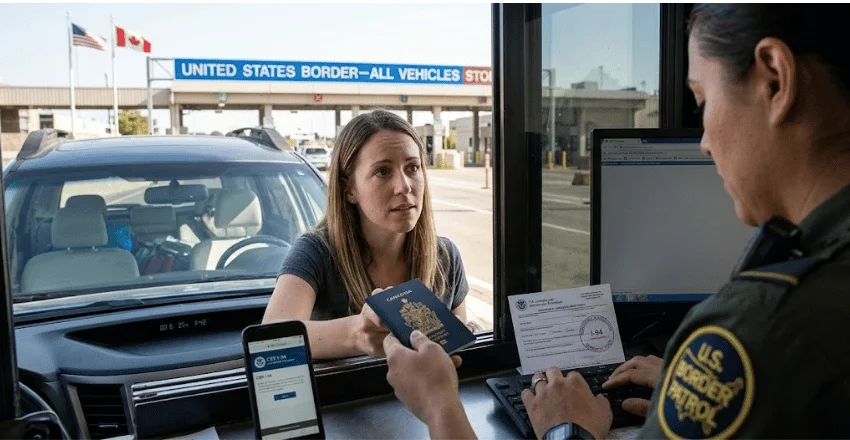
According to the Government of Canada’s travel advice for the United States, Canadian visitors can usually stay for 6 months without a visa. Read the word “usually” carefully. Nothing entitles you to six months.
Admission is a decision, made in seconds, by the officer in front of you, and that officer can admit you for less. Frequent long visits invite a shorter grant. So does a car packed like a house move, or a vague answer about where you really live.
Travellers arriving by land often receive no stamped I-94, so many Canadians never learn their actual authorized date. Check the I-94 record online after every entry. It is free, and it is the only document that states the day you must leave.
If you need longer, apply to extend before your permission expires. Applying late is treated as an overstay, and an overstay of more than 180 days carries a three-year bar on returning.
The 30-Day Rule Most Guides Still Miss
Since April 2025, Canadians and other foreign nationals visiting the United States for more than 30 days must be registered with the US government. Registration is done through USCIS Form G-325R, online, and it applies to ordinary visitors who were not registered at the border.
This catches everyone who assumes six months is the only number that matters. A snowbird who drives to Arizona in November and returns in April crosses the line on day 31.
Failing to register can bring fines and misdemeanour prosecution.
Register once you know the visit will run long, and keep proof of the confirmation with your travel documents. Our Canadian law explainers cover the paperwork side of cross-border life in more detail.
The Tax Clock, Worked Through

Time in the US can make you a US tax resident even though your home and your family are in Canada. The US Internal Revenue Service substantial presence guidance sets the bar at two conditions: 31 days in the current year, and 183 days across a weighted three-year count.
Weighting is where people go wrong.
Count every day of the current year in full. Take one third of the days from the year before, then one sixth of the days from the year before that. Here is a snowbird who spends four months south each winter:
- 2026: 120 days, counted in full, so 120.
- 2025: 120 days, divided by three, so 40.
- 2024: 120 days, divided by six, so 20.
- Total: 180 weighted days.
That person is 3 days clear. Add a week to any of those winters and the same person is a US tax resident.
Steady habits, not one dramatic trip, are what push people over the line.
The escape hatch is the closer connection exception, claimed on Form 8840. You qualify if you were present fewer than 183 actual days in the current year, keep a tax home in Canada, and can show closer ties here. File it by the June deadline each year. Snowbirds who file it every winter almost never have a problem; the ones who skip a year are the ones who get letters.
The Clock Canadians Forget: Provincial Health Coverage
OHIP is stricter than the US tax rules. Ontario asks you to be physically in the province for 153 days in any 12-month period, which leaves roughly seven months for travel. Lose that, and you lose coverage, including coverage for the emergency that happens abroad.
Other provinces set their own numbers, and none of them match Ontario’s. British Columbia and Quebec apply their own absence rules, so a national article that quotes one figure is quoting the wrong one for most readers. Check your own province before booking a long winter.
Travel medical insurance is separate and non-negotiable.
A few days in a Florida cardiac unit can bill out well past US$100,000, comfortably over CA$130,000 once converted. Provincial plans reimburse a small fraction of a foreign bill even when your coverage is intact, so the balance is yours.
What an Overstay Actually Costs
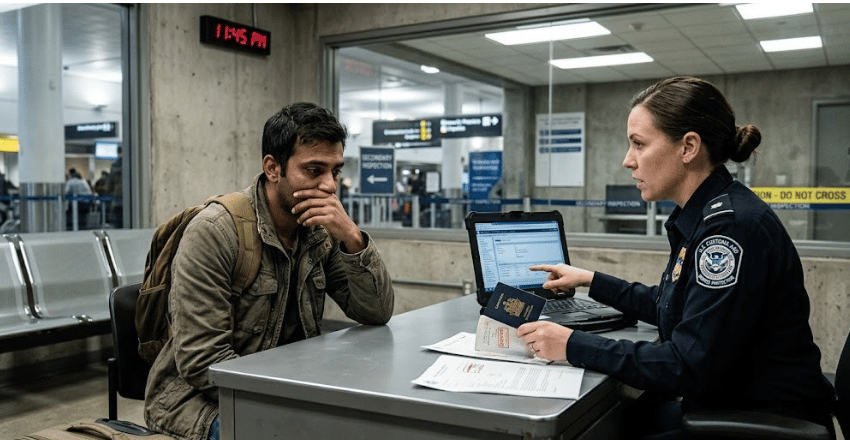
Overstaying is not a parking ticket. Your visitor status ends the moment your authorized period expires, and the consequences scale with the length of the overstay:
- Any overstay can void future visa-free entry and invite secondary inspection.
- More than 180 days of unlawful presence triggers a three-year bar on returning.
- More than one year triggers a ten-year bar.
- Officers see the history at every future crossing, indefinitely.
There is no grace period and no benefit to waiting. If you are close to your date and something has gone wrong, get advice before the date passes rather than after.
Before Your Next Long Trip
Three habits prevent almost every problem here. Check your I-94 after each entry, register with USCIS if a visit will run past 30 days, and track your US days in a calendar you will keep. Add Form 8840 to your February routine if you winter south.
More Canadian legal guides are collected on the Lawverra blog. For advice on a specific cross-border situation, contact the Lawverra team.
This article is general information and is not legal or tax advice. Speak to a licensed Canadian lawyer or a cross-border tax adviser about your own circumstances.
Frequently Asked Questions
No annual cap is written into the visitor rules, but stacking entries draws scrutiny and pushes you past the tax and health thresholds.
No. ESTA applies to Visa Waiver Program nationals. Canadian citizens are visa exempt for ordinary business and tourist visits.
Each admission is a fresh decision, but a quick trip across the border to restart the clock is exactly what officers watch for.
For the substantial presence test, any part of a day generally counts as a full day.
Visitor status is narrow, and the answer depends on who pays you and who benefits. Get advice before you go.