


A restitution order is a criminal court telling a convicted offender to repay a victim for what the crime actually cost. Here is the distinction most people arrive looking for: that money goes to the victim, while a fine goes to the government. One repairs a loss; the other punishes. The restitution meaning that matters in a sentencing court is narrower than the everyday one.
Key takeaways
- The victim keeps the money. A fine goes to the provincial treasury instead.
- Only losses that are readily ascertainable qualify, such as a repair bill, a replacement cost, or lost wages.
- Pain and suffering belongs in a civil claim, never in a sentencing court.
- Section 737.1 obliges the judge to consider an order in every case, and to give reasons for saying no.
- An unpaid order can be filed in civil court and collected like any other judgment.
- A bankruptcy discharge does not wipe the debt out.
Restitution meaning in plain English

In Canadian criminal law, this is a sentencing order. It tells a convicted offender to pay a victim back for losses the crime caused. Those losses must be countable, not estimated. A judge sets the figure, the victim keeps the money, and nobody needs a separate lawsuit to collect it.
The order does two jobs at once. It closes part of the hole in the victim’s finances. Repayment also makes the offender feel the cost of what they did, rather than a number owed to the Crown.
Everyday English is looser than that. People use the word for any kind of making good, including an apology. Judges will not.
Restitution, a fine, the victim surcharge and civil damages
Four payments get muddled together at sentencing, and they travel in different directions. Two of them punish, one repairs, and one belongs to a different court entirely. Sorting out which one you are actually owed decides where you go next. If a criminal court cannot put a firm number on your loss, suing for the money in Small Claims Court is the usual fallback.
| Payment | Who receives it | What it covers | Who decides | If it goes unpaid |
|---|---|---|---|---|
| Restitution order | The victim, directly | Readily ascertainable losses: repairs, replacement value, lost income, moving costs | The sentencing judge, under sections 738 and 739 | The victim files it in civil court and enforces it as a judgment |
| Fine | The provincial government | Punishment, scaled to the gravity of the offence | The sentencing judge | Default proceedings, a licence suspension, or jail in default |
| Victim surcharge | Provincial victim services funds | A flat levy: 30% of any fine, or CA$100 summary and CA$200 indictable when no fine is imposed | Set by statute, waivable for undue hardship | Collected like a fine |
| Civil damages | The plaintiff who sued | Everything provable, pain and suffering and future loss included | A civil judge, on the balance of probabilities | Garnishment, liens and other civil enforcement |
That difference bites hardest when the offender has almost nothing. Section 740 tells the court to put the victim first. Repayment outranks both a fine and a forfeiture order when there is not enough money to satisfy everything.
Which losses a judge can order repaid
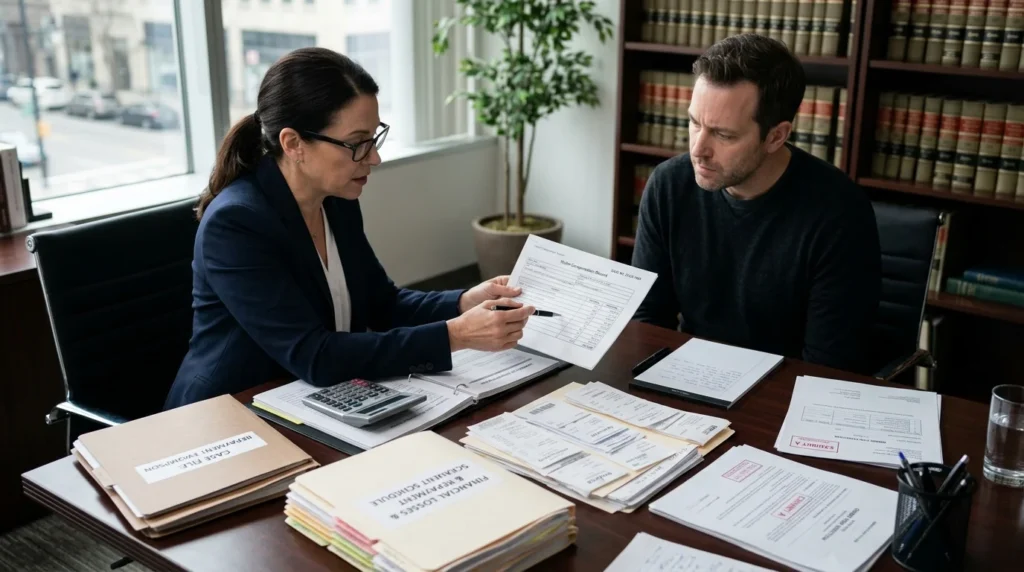
Readily ascertainable is the whole test. Receipts count for more than outrage at this stage. An invoice, a quote, a pay stub or an insurer’s letter makes a figure ascertainable. Guesswork does not. Any judge who would need a full trial to value the claim will send it elsewhere.
According to section 738 of the Criminal Code, the court can order the replacement value of property that was damaged, lost or destroyed. Parliament widened that list in 2019. It now reaches the cost of getting a non-consensual intimate image taken off the internet.
- Replacement value of property damaged, lost or destroyed by the offence
- Pecuniary damages flowing from bodily or psychological harm, including lost income and the cost of care
- Temporary housing, food, child care and transportation for an intimate partner, child or household member who had to move out
- Expenses to re-establish an identity after identity theft or identity fraud, including the cost of correcting a credit record
- Expenses to remove an intimate image distributed without consent
What the list leaves out is the part victims mind most. Department of Justice guidance states that a sentencing judge cannot award pain and suffering. Emotional distress falls outside the order too, and the fact sheet points victims to the civil courts for both. Today’s framework dates from the Canadian Victims Bill of Rights, in force since July 23, 2015, with the loss categories last widened in 2019.
Every sentencing judge has to consider it
Section 737.1 turned a discretion into a duty. On any conviction, and on a discharge under section 730, the court must consider making a restitution order before it settles the rest of the sentence.
Judges also put a question to the prosecutor: did anyone give the victims a genuine chance to say what they lost? Victims answer on Form 34.1, the Statement on Restitution, attaching receipts, pay stubs and repair quotes. If a victim asks for repayment and the court refuses, the reasons go on the record. That paper trail is what an appeal lawyer reads first. Where a crime left several people out of pocket, one order can split the amounts between them under section 739.3.
Poverty is not an answer to the request. Section 739.1 says the offender’s means, or the absence of them, cannot stop the court from making the order. Judges can still set a deadline or a payment schedule under section 739.2. They can also make the order stand alone, instead of hanging it off a probation order or a conditional sentence.
What happens when the offender never pays
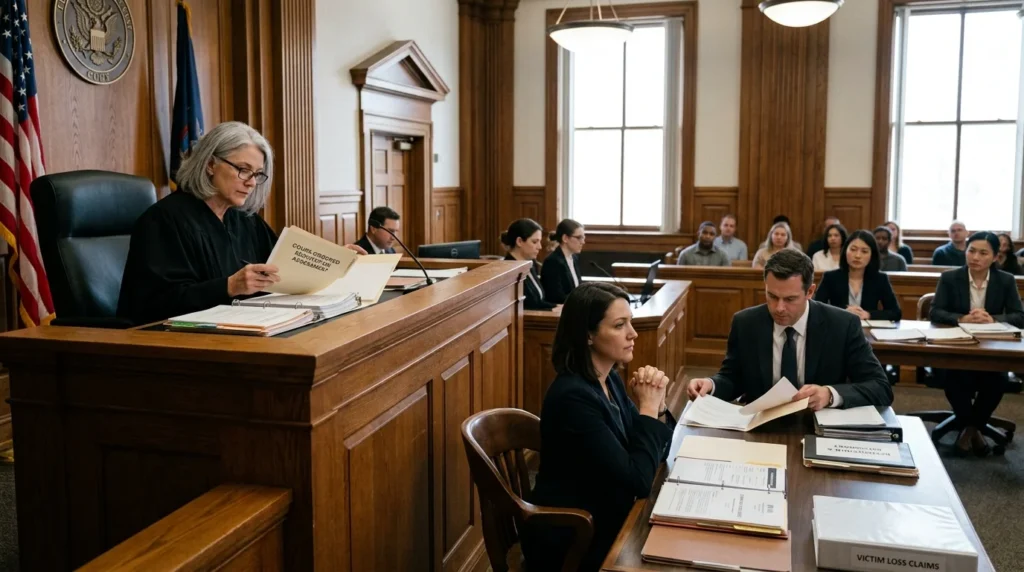
Criminal courts will not chase the money for you. Section 741 lets a victim file the unpaid amount in any civil court in Canada, where it turns into an ordinary judgment. After that, the usual collection tools open up: garnishing wages, registering a lien on a house, seizing a bank account. Some provinces run a restitution program that collects on the victim’s behalf, using the public-authority route in section 739.4. Ask the Crown whether yours does before the hearing. If you want to go deeper, read Mens Rea in Canada.
Bankruptcy does not end it either. Paragraph 178(1)(a) of the Bankruptcy and Insolvency Act keeps a fine, a penalty or a court-ordered repayment alive through a discharge. The obligation follows the offender out the other side.
One caution before you celebrate. Enforcement costs time and filing fees, and a judgment against someone with no assets and no job collects nothing at all.
The other sense: unjust enrichment and workplace claims
Outside criminal court, the word changes shape. In private law, restitution describes handing back a benefit someone received unfairly. That is the remedy for unjust enrichment, and it explains why a bank that pays you twice can demand the second payment back.
Employment and family disputes borrow the same logic, whether that means recovering an overpaid wage or returning property after a separation. Suing stays open on the criminal side as well. Nothing in section 741.2 blocks that, and you can read more Canadian law guides on how those claims run.
Frequently asked questions
It is a court order under sections 738 and 739. A convicted offender repays the victim’s readily ascertainable losses, and the order forms part of the sentence.
Yes. Under section 741.2, every civil remedy survives, so a victim can still sue for pain and suffering, or for losses the criminal court would not value. Any amount already repaid gets credited against the civil award. Nobody collects the same loss twice.
Usually, yes. A deductible is a fixed, documented, out-of-pocket figure, which is exactly the kind of number a sentencing judge can work with. Bring the insurer’s letter.
Custody and repayment sit side by side. Prison does not cancel the debt, and the clock on collection keeps running while the offender serves the term.
Once filed, it behaves like a civil judgment, so provincial limitation and renewal rules decide how long it stays enforceable. Ontario judgments, for example, need renewing after 20 years. Bring the court file number when you go to register it. Where a large sum is at stake, or the sentencing date is close, contact a criminal lawyer before the hearing rather than after it.
Restitution is only one route to compensation after harm, and it is not a substitute for the civil and insurance routes covered in our personal injury guides.