
Divorce papers in Canada are not provided as one national packet. The Divorce Act sets the legal rules, but each province and territory provides its own court forms and filing procedures. Start with the forms for the province where either spouse meets the one-year residence requirement. Then gather your marriage and supporting documents before filing. For a closer look, see The Ultimate Guide to General Liability Insurance Canada.
| What you need to know | Canada-wide answer |
|---|---|
| Is there one national form package? | No. Court forms and filing procedures are provincial or territorial. |
| Which law governs the divorce itself? | The federal Divorce Act. |
| Where can you start a proceeding? | Generally, in a province where either spouse has been habitually resident for at least one year immediately before the proceeding. |
| What proves marriage breakdown? | One year of separation, adultery, or physical or mental cruelty. |
| Do the forms change by case type? | Yes. Joint, uncontested, and disputed cases can require different forms. |
| Does the court consider child support? | Yes. The court must be satisfied that reasonable child-support arrangements have been made before granting a divorce. |
| When does the divorce usually take effect? | Normally, 31 days after the judgment granting it. |
| What proves the divorce afterward? | A divorce certificate can be obtained after the divorce takes effect. |
Key Takeaways
- Start with your province or territory’s official court forms, not a generic form package.
- Decide whether the case is joint, uncontested, or disputed before selecting an application.
- Expect to provide proof of marriage and additional documents related to children, support, property, or other claims.
- A spouse does not always have to agree to or sign a divorce application for the divorce to proceed, but proper service rules still apply.
- Check the current court instructions before filing because forms, fees, and online filing systems can change.
Start With Your Province, Not a Generic Form Pack
Canada combines federal divorce law with provincial court procedures.
The Divorce Act determines matters such as jurisdiction and the legal basis for ending a marriage. Provinces and territories decide which court forms you use, how you submit them, and which local filing requirements apply.
That distinction can prevent a common mistake: downloading a form that appears official but is from another province.
Only legally married spouses need a divorce order. An unmarried couple may still have property, support, or parenting issues to resolve. Those issues are governed by different rules. For an example from Ontario, see Lawverra’s guide to common-law rights in Ontario.
The forms also vary within the same province, depending on the type of case.
| Province | Examples of current form routes |
| Ontario | Form 8A is used for a simple divorce or a joint application when the spouses agree. Form 8 is used for a general application involving disputed claims. |
| British Columbia | Supreme Court family forms include Form F1 for a joint family claim and Form F3 for a family claim. Undefended divorce materials can also include Forms F35 to F38. |
| Alberta | Current Court of King’s Bench materials include forms such as FL-01, FL-21, FL-23, and FL-25 for different stages of a divorce proceeding. |
| Quebec | Spouses who agree may use a joint application based on a draft agreement. An individual application is available when they do not proceed jointly. |
If you are filing in British Columbia, Lawverra’s BC divorce filing guide provides more province-specific context.
Which Divorce Papers Do You Need?
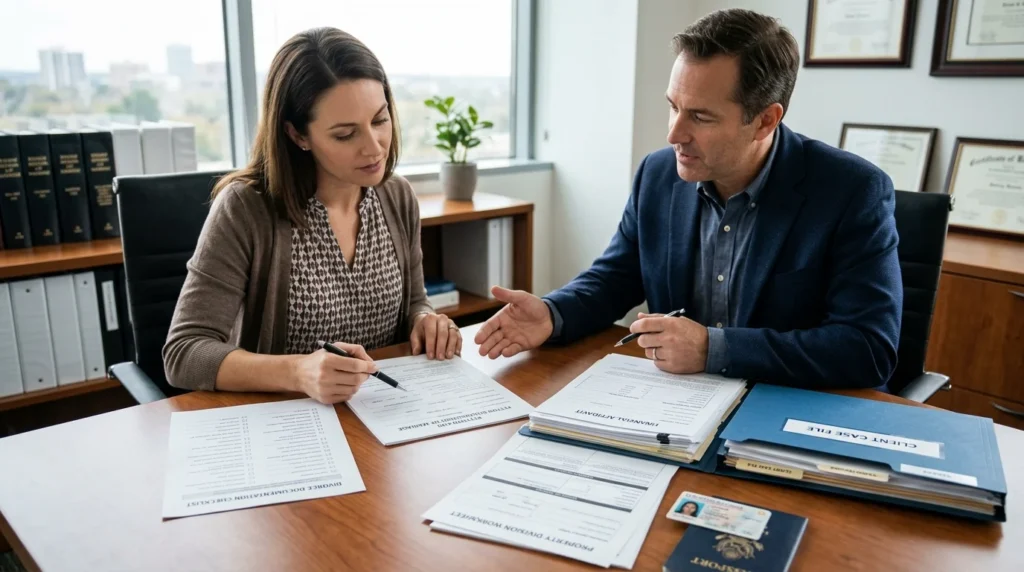
The exact package depends on your province and what you are asking the court to decide. A straightforward case usually begins with an application or claim asking for a divorce. A joint application is different because both spouses participate from the beginning.
A disputed case may also raise parenting, support, property, or other family-law claims. Those issues can change the application form and the evidence required.
You should also expect to deal with several supporting records during the process:
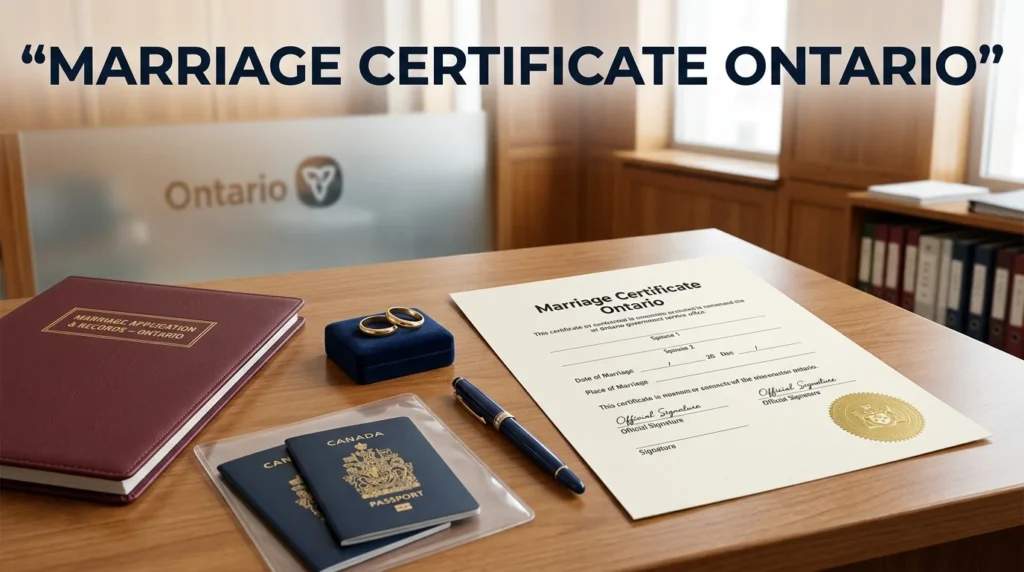
- Marriage evidence. Courts commonly require an official marriage certificate. Ontario requires the original marriage certificate and may require a certified translation if the document is not in English.
- Service evidence. A sole applicant normally needs proof that the other spouse received the filed documents in accordance with the applicable service rules.
- Financial or support information. Extra records may be required when support or financial claims are involved.
- Information about children. A court granting a divorce must consider whether reasonable child-support arrangements have been made.
- Final-stage forms. Affidavits, requisitions, draft orders, or other documents may be required when you ask the court to grant the final order.
Not every document belongs in the initial filing. A useful way to organize the case is to separate starting documents, service documents, and final-order documents.
That approach also reduces the risk of completing a final-stage affidavit before the required waiting or response period has passed.
For support issues, Lawverra’s explanation of how child support is calculated in Canada can help you understand why support information may matter before the court grants the divorce.
How the Filing Process Works in Practice
The details change by province, but the basic workflow is similar.
- Confirm jurisdiction and your filing route. Identify the province where the case can be started and decide whether it is joint, uncontested, or disputed.
- Download the current official forms. Use your provincial court or government website. Avoid relying on an old saved copy.
- Complete the application and supporting documents. Check names, marriage details, separation dates, claims, and the court location carefully.
- File with the correct court. Submit the package using the online or in-person method currently accepted in your province and pay the required fees.
- Serve the other spouse when required. A sole application normally requires formal service. Give the respondent the required time to answer.
- Submit the final materials. Once the procedural requirements are met, ask the court to grant the order. Obtain a certificate after the divorce becomes effective.
Ontario shows why current instructions matter. Toronto family filings moved to the Ontario Courts Public Portal on October 14, 2025. Other Ontario locations use Justice Services Online for supported electronic filings.
The same official fee page currently lists a $214 application fee and a $445 fee for placing a matter on the hearing list. A divorce claim also carries a $10 federal registration fee. The federal fee is not covered by Ontario’s fee-waiver process.
Those are Ontario figures, not Canada-wide fees. Check the current fee schedule for the province where you will file.
What the Court Checks Before Granting the Divorce
Filing the correct forms does not automatically result in a divorce order.
Section 8 of the federal Divorce Act makes marriage breakdown the sole ground for divorce, established by 1 year of living separate and apart, adultery, or physical or mental cruelty.
For a separation-based case, the spouses must have lived separate and apart for at least one year immediately before the divorce is determined. They must also have been living apart when the proceeding began.
A short attempt at reconciliation does not always restart that clock. Periods of reconciliation totalling no more than 90 days can be excluded when calculating the one-year separation period.
The court also considers child support when children are involved. The Divorce Act directs the court to stay the granting of a divorce if reasonable support arrangements have not been made.
Canada also operates the Central Registry of Divorce Proceedings. The registry helps courts determine whether another divorce proceeding involving the same spouses has already been started.
Does Your Spouse Have to Agree?
A divorce does not always require both spouses to sign a joint application. One spouse can start a sole proceeding. The other spouse must then receive the application in accordance with the applicable service rules and have an opportunity to respond.
Ontario, for example, generally gives a respondent 30 days to be served and file an answer. The period is 60 days if the respondent was served outside Canada or the United States.
If no answer is filed, the case may continue as an uncontested matter after the required procedural steps are completed.
If the other spouse disputes parenting, support, property, or another claim, the case can become more involved, even if both people agree that the marriage should end.
The Divorce Order and Divorce Certificate Are Different
The judgment is the court’s decision granting the divorce. It usually does not end the marriage on the same day.
In most cases, the divorce takes effect on the 31st day after the judgment. A court can set an earlier effective date in special circumstances.
After the divorce takes effect, you can request a divorce certificate. The certificate is commonly used as proof that the marriage has legally ended.
That distinction matters if you plan to remarry. Do not treat the filing date, hearing date, or judgment date as the date on which the marriage necessarily ends.
When Legal Advice Can Prevent a Costly Filing Problem
A straightforward uncontested case may be manageable with official court instructions. Legal advice becomes more valuable when the filing affects rights beyond the divorce itself.
Consider speaking with a family lawyer if the case involves substantial property, pensions, a family business, disputed parenting, uncertain support, an international spouse, or questions about jurisdiction.
Get legal advice promptly if family violence or personal safety concerns affect service, communication, or court attendance. Lawverra’s guide to restraining orders and peace bonds in Canada explains two avenues of protection that may be relevant in separate proceedings.
Legal advice can also help before you sign a separation agreement. Ending the marriage and resolving every financial or parenting issue are not always the same task.
Your Next Step
First, identify the province or territory where you can properly start the case. Then decide whether you are filing jointly, seeking only a divorce, or asking the court to resolve additional family-law claims.
Download the newest forms directly from the relevant court or government website. Gather your marriage certificate and any records your claims require before completing the package.
If property, children, support, safety, or cross-border issues are disputed, get legal advice before signing or filing documents that may affect your rights.
Frequently Asked Questions
Yes. Most provinces provide family-court forms through official government or court websites. Use the forms for the province where your proceeding belongs and check the version date before filing. Ontario, British Columbia, Alberta, and Quebec each maintain their own form systems.
Federal law allows a separation-based proceeding to be started while the one-year period is still running. The year must be complete before the divorce is determined, and the spouses must have been separated when the proceeding began. Provincial filing systems may have additional procedural timing rules, so check the current instructions for your province.
There is no single Canada-wide court fee. Provincial filing charges differ and can change. Ontario currently lists a $214 application fee, a $445 hearing-list fee, and a $10 federal registration fee for a divorce claim.
There is no reliable national processing time. Timing depends on the province, court workload, service, whether the case is contested, and whether the paperwork is complete. Once the court grants the divorce, it normally becomes effective 31 days later.