


A cease and desist letter is a written demand asking a person or organization to stop specified conduct. In Canada, the letter itself is generally not a court order and does not automatically compel compliance. It can still be important because it puts the dispute and the sender’s demands in writing.
If you receive one, do not assume the allegations have already been proven. If you are considering sending one, make sure the facts and demands are accurate. The legal consequences depend on the conduct, the rights involved, and the province or territory.
Cease and Desist in Canada: Key Facts
| Question | Short answer |
|---|---|
| What is it? | A written demand asking someone to stop specified conduct |
| Is it a court order? | No, a private letter is not itself a court order |
| Must you respond? | Not necessarily, but ignoring a serious claim can carry practical risks |
| Who can send one? | An individual, business, lawyer, or other authorized representative |
| Common uses | Intellectual property, defamation, harassment, confidentiality, and contract disputes |
| Can you write your own? | Yes, but legal review can reduce avoidable risks |
| What may happen next? | Negotiation, no further action, settlement, or court proceedings |
This kind of letter gives formal notice of a dispute and demands that particular conduct stop. It does not decide who is legally right. If the dispute continues, the sender may pursue other remedies, while the recipient may dispute the allegations, negotiate, comply, or obtain legal advice before responding.
What Does a Cease and Desist Letter Mean?
The words describe two related demands. “Cease” means stop the identified conduct, while “desist” means do not resume it. The document normally explains what the sender believes is happening and what they want the recipient to do.
Canadian government guidance recognizes these letters as one possible enforcement strategy for intellectual property disputes. The Canadian Intellectual Property Office says an IP owner can ask an alleged infringer to stop the disputed activity. It also recommends explaining the alleged infringement specifically and identifying a deadline for compliance.
The letter should not be confused with a judgment, injunction, or other court order. A private sender does not gain judicial authority by putting legal language on letterhead. A court proceeding is a separate process with its own documents, deadlines, and consequences.
When Are Cease and Desist Letters Used?
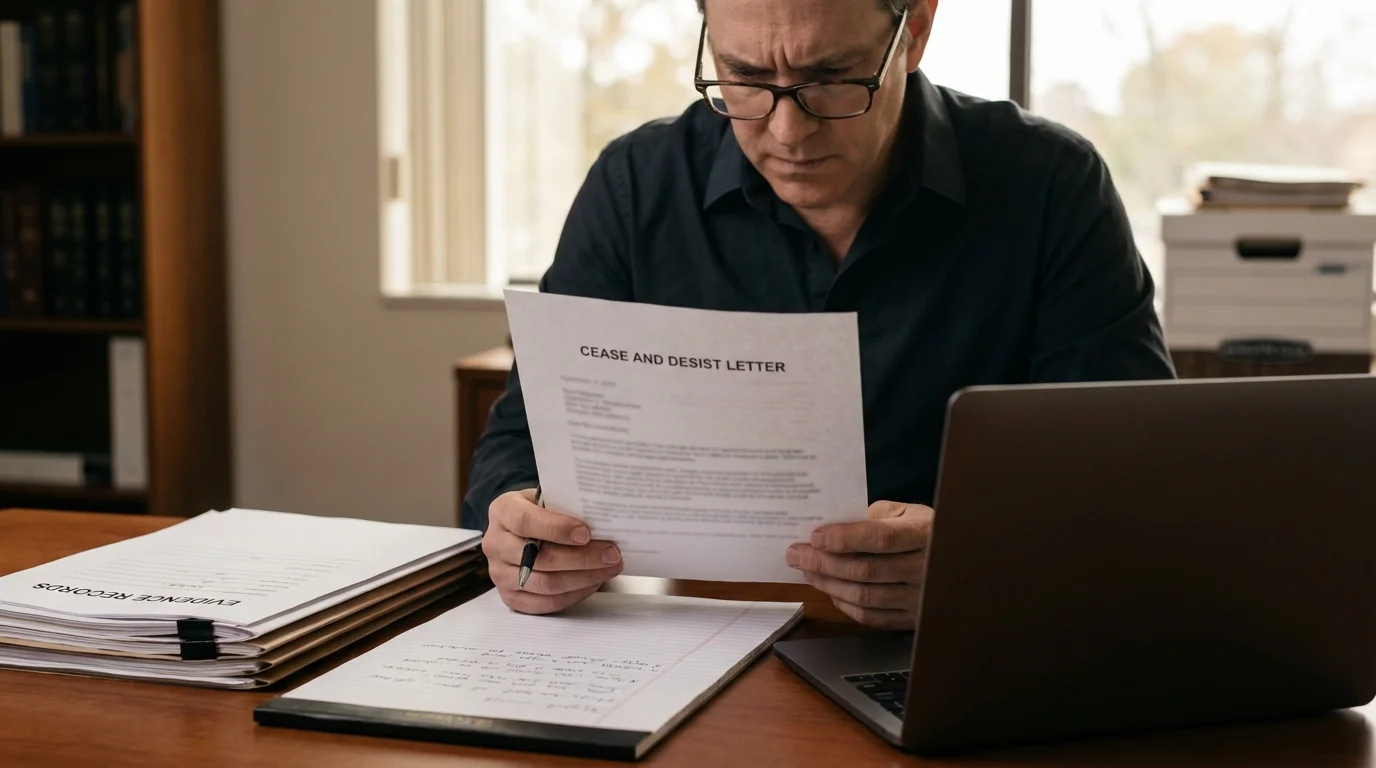
These letters appear in several types of Canadian disputes. Their purpose is usually to identify unwanted or allegedly unlawful conduct before the sender considers stronger legal action. The appropriate legal basis changes significantly from one situation to another.
Common examples include the following.
- trademark or copyright infringement;
- passing off involving a business name or branding;
- allegedly defamatory statements;
- unwanted communications or certain forms of harassment;
- breach of confidentiality obligations;
- misuse of proprietary business information; and
- continuing conduct said to breach a contract.
Intellectual property is one area where federal guidance specifically discusses this approach. The Canadian Intellectual Property Office identifies direct communication as one possible response to potential IP infringement. Depending on the dispute, negotiation or licensing may also provide an alternative to litigation.
A different remedy may be needed when personal safety is the central concern. Someone facing threatening behaviour should not treat a private letter as a substitute for emergency assistance or an available court remedy. Lawverra explains how a peace bond in Canada can impose court-ordered conditions in qualifying circumstances.
Family disputes can involve a different legal process. The available remedy depends on the relationship, jurisdiction, facts, and type of protection required. Lawverra’s guide to restraining orders in Canada explains how that remedy differs from a peace bond.
What Should the Letter Include?
A useful letter should be specific enough for the recipient to understand the complaint. Vague accusations can make it harder to assess the claim or determine what compliance requires. Unsupported threats can also create unnecessary risk for the sender.
For intellectual property disputes, the Canadian Intellectual Property Office identifies four usual elements of such a letter: the parties’ names, the date, specific details of the alleged infringement, and a compliance deadline. CIPO also warns that a sender could face liability if a letter is abusive, defamatory, or fails to meet legal requirements. That risk is one reason significant or complicated claims may warrant professional legal advice before a letter is sent.
More generally, a letter may contain the following details.
- the sender’s and recipient’s names;
- the date of the letter;
- a factual description of the disputed conduct;
- relevant dates, publications, messages, products, or other evidence;
- the legal or contractual right said to be affected;
- a precise demand explaining what must stop;
- any requested corrective action;
- a reasonable response or compliance deadline; and
- the steps the sender may consider if the matter remains unresolved.
Keep the wording factual and proportionate. Avoid statements you cannot support with evidence. A demand should explain the problem and requested resolution without overstating what the law establishes.
Is a Cease and Desist Letter Legally Binding in Canada?
A private demand letter is generally not legally binding in the same way as a court order. Receiving one does not mean a judge has accepted the sender’s allegations. It also does not automatically establish liability.
That distinction does not make the document meaningless. The letter can notify the recipient about a claimed right and create a written record of the sender’s objection. It may also lead to negotiations that resolve the dispute before anyone starts a lawsuit.
Court documents require different treatment. If a claim, application, injunction, or other formal court document arrives, procedural deadlines may apply. Missing those deadlines can have consequences even when you believe the underlying allegations are wrong.
The procedure also depends on where a case is filed. For example, Lawverra’s overview of the Ontario civil procedure rules explains the framework governing civil proceedings in that province. Other provinces and territories have their own procedural requirements.
Can You Write and Send the Letter Yourself?
You do not always need a lawyer to write a private demand. A person or business can communicate directly about a dispute. The more complicated question is whether sending a particular letter is strategically and legally sensible.
Legal review can be useful when substantial money, reputation, intellectual property, employment obligations, or ongoing business relationships are involved. A lawyer can assess whether the claimed right exists and whether the evidence supports the allegations. Legal advice may also help prevent demands that are broader than the law permits.
Before sending anything, preserve the records connected with the dispute. Keep copies of contracts, screenshots, messages, invoices, registrations, publications, and other relevant material. Do not alter evidence because you expect the other side to challenge your position.
How Should You Send a Cease and Desist Letter?
Choose a delivery method that creates a reliable record. Federal IP guidance recommends using a method that helps establish that the communication reached the recipient. Registered mail, courier, fax, or email may be appropriate depending on the circumstances.
Keep a dated copy of the final document and proof of delivery. Those records may become relevant if the dispute later escalates. Make sure the version you retain matches the version actually sent.
Avoid unnecessary distribution to unrelated third parties. Canadian Intellectual Property Office guidance cautions against copying third parties on IP demand letters. Wider publication can complicate a dispute, particularly where allegations concern reputation or alleged wrongdoing.
What Should You Do If You Receive One?
Start by reading the entire letter and identifying every demand and deadline. Separate factual allegations from legal conclusions. Then preserve the documents, messages, contracts, screenshots, or other records connected with the dispute.
Do not assume you must immediately admit wrongdoing or agree with the sender. You may need to determine whether the sender owns the right they claim. You should also consider whether their account is accurate and whether a defence or exception could apply.
Those questions can become technical in copyright, trademark, contract, and defamation matters. The correct response may also depend on facts that do not appear in the letter. Professional legal advice can be useful where significant rights or potential litigation are involved.
Should You Ignore the Letter?
Ignoring a private letter does not transform it into a court order. Still, silence may allow an avoidable dispute to escalate. The sender might pursue litigation, seek an injunction, make another demand, or abandon the matter entirely.
Whether a response makes sense depends on the claim and your circumstances. A response can deny allegations, request evidence, clarify facts, propose a resolution, or confirm that specified conduct has stopped. It should not contain unnecessary admissions that could later affect your position.
Pay close attention to what arrives next. A court-issued claim or application is fundamentally different from another private demand. Seek legal advice promptly if you are unsure whether a document starts a formal legal proceeding.
Cease and Desist Letter vs. Court Order
The distinction is easiest to see side by side. A private letter communicates one party’s position, while a court order comes from judicial authority. The consequences of ignoring them are therefore different.
| Feature | Private cease-and-desist letter | Court order or injunction |
|---|---|---|
| Issued by | Individual, business, lawyer, or representative | Court |
| Proves the allegations | No | A court has made an order through a legal process |
| Automatically enforceable | Generally no | Yes, subject to its terms |
| Can demand conduct stop | Yes | Yes |
| Ignoring it | May lead to escalation | Can create serious legal consequences |
| Legal advice useful | Often | Strongly advisable |
Do not rely only on the heading printed at the top of a document. Read who issued it and whether it identifies a court proceeding. If you cannot tell what you received, a Canadian lawyer or licensed legal professional can help identify it.
Common Mistakes to Avoid
Sending an exaggerated letter can weaken rather than strengthen a position. Claims should be connected to evidence and a recognizable legal or contractual right. Threatening consequences that you cannot lawfully pursue can also create needless problems.
Recipients make mistakes too. Deleting messages, responding publicly in anger, or assuming the letter has no significance can complicate the dispute. The better approach is to preserve evidence and understand the allegations before choosing a response.
Canadian law also varies by jurisdiction. Provincial rules can affect defamation, contracts, civil procedure, limitation periods, and available remedies. Quebec’s civil law system can differ materially from common-law provinces and territories.
Frequently Asked Questions
What is a cease and desist letter?
A cease and desist letter is a private written demand asking someone to stop specified conduct. It commonly identifies the conduct, explains the sender’s position, states what action is requested, and may warn about further legal proceedings. The letter itself normally does not decide whether the allegations are legally correct.
Does receiving one mean I am being sued?
No, receiving a private letter is not the same as receiving a lawsuit or court order. A lawsuit requires formal legal proceedings and applicable court documents. Always check the document carefully if you are uncertain about what you received.
Do I have to respond?
There is not generally an automatic obligation to answer a private letter merely because it was sent. Still, a response may be sensible when serious rights, money, reputation, or business interests are involved. Never ignore actual court documents because their response deadlines can be mandatory.
Can I send one without hiring a lawyer?
You can generally communicate your own demand without retaining counsel. The harder issue is whether the demand accurately reflects your rights and avoids creating new legal problems. Professional review can be valuable when the dispute is complex or significant.
Can a letter stop harassment?
A private letter may tell someone that further contact is unwanted, but it is not a protective court order. Safety concerns can require different measures, including contacting police where appropriate. The appropriate legal remedy depends on the circumstances and applicable provincial or federal law.
What happens if the recipient refuses to stop?
The sender must decide whether to take another lawful step. Depending on the claim, options can include negotiation, settlement, an application for an injunction, or other civil proceedings. The available remedies depend on the underlying legal right and the facts.
Before You Send or Respond
This type of letter is best understood as formal notice, not a judgment. It can help resolve a dispute without litigation, but it can also precede more serious proceedings. Accurate facts, preserved evidence, careful wording, and attention to deadlines matter on both sides.