
Signing costs you up to twelve months of court conditions, your firearms in most cases, and a police file entry that outlasts the order itself. What it buys is the thing you probably want most: no conviction, no guilty plea, and the charge gone. A peace bond is a trade, and the price is higher than the courthouse hallway makes it sound.
The short version. A section 810 recognizance ends the criminal charge without a finding of guilt, usually in a single appearance. In exchange, you accept a fixed set of terms and conditions, a weapons prohibition in most files, and an entry police across Canada can see. Slip once, and you pick up a brand-new criminal charge.
The conditions, and what each one does to your week

Courts rarely explain the practical effect of each line. Read the wording twice. Here is the same list, translated into what each line does to an ordinary week, and the charge police can lay when you get it wrong.
| Condition | What it means day to day | What breaching it triggers |
|---|---|---|
| No contact, direct or indirect | No calls, texts or messages, and nothing passed through a friend or a relative on your behalf | Arrest and a fresh charge under section 811, even if the other person messaged you first |
| Weapons and firearms prohibition | You surrender guns, ammunition and your firearms licence for the period the order names | A weapons count stacked on the breach, plus a much harder road back to a licence |
| Stay-away or distance term | You cannot attend a named home, school, or workplace, or come within a set ra radius of 00 metres | Arrest even where the meeting was pure accident, because the order has no accident exception |
| Keep the peace and be of good behaviour | Any new allegation during the term also breaks this line | Two charges out of one incident, prosecuted together |
| Abstain from alcohol or drugs, with sampling | Testing on demand, and scheduled samples where the court adds them under section 810(3.02) | A refused or failed sample is itself the proof, so nobody needs a witness |
| Report to police or a supervising officer | Scheduled check-ins, on their calendar rather than yours | A criminal charge for a missed appointment, with no complainant and no harm |
TL;DR
- It is neither a conviction nor a guilty plea. Nothing goes on your criminal record.
- The maximum term is 12 months, and it expires automatically.
- The test is reasonable fear on reasonable grounds, far below proof beyond a reasonable doubt.
- Breaching it is a separate criminal offence carrying up to 4 years’ imprisonment.
- Police services can still disclose it on a vulnerable sector check while it is live.
- Refusing to sign one the court has ordered can mean up to 12 months in jail.
Not a conviction, and you are not pleading guilty.
This is the genuinely good news, and it is worth stating plainly. The Government of Ontario states it in a single line on its own guidance page, updated in May 2026. A defendant who enters into the order “does not receive a criminal record of conviction”. The Crown withdraws the charge, and there is no finding of guilt to disclose on a job application.
You admit nothing.
That distinction matters for immigration status, professional licensing and every ordinary employment check. It is also why prosecutors so often offer this resolution in first-time domestic and neighbour files. If you want the wider context on charges, records and sentencing, our criminal law section covers the surrounding ground.
What the court has to be satisfied of
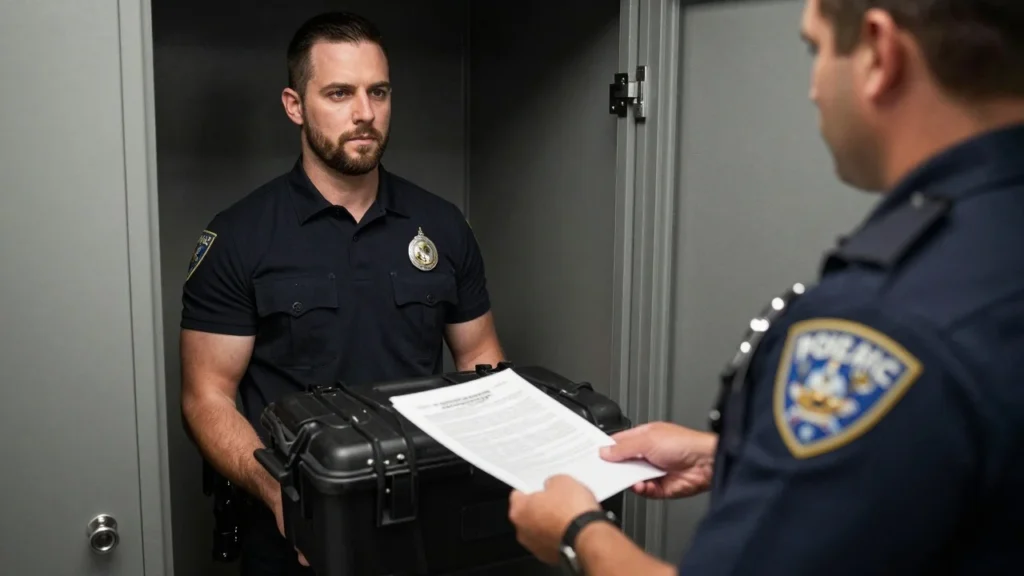
The bar is low, and people constantly misread it. Under section 810 of the Criminal Code, someone lays an information. In it, they swear they fear on reasonable grounds that you will hurt them, their intimate partner or their child, or damage their property. The court never asks whether you did anything. It asks whether their fear is reasonable.
If the court is satisfied, it can order you into a recognizance to keep the peace and be of good behaviour for no more than 12 months. There is a sting at section 810(3.01) that almost nobody mentions. A defendant who refuses to comply with the court’s order can go to prison for up to 12 months.
There is also a common law version, which judges can impose without an information under section 810. It works the same way in practice, with a defined term and defined conditions.
Breaching it is its own criminal offence
Here the good news stops.
Section 811 of the Criminal Code, published by the Department of Justice, makes a breach a hybrid offence. On the Justice Laws Website, as of May 26, 2026, an indictable breach carries a maximum penalty of 4 years’ imprisonment. The Crown can also proceed by summary conviction on a lower-end file.
Read that against the order you signed to avoid a record. The order itself leaves you clean. Breaking it hands you the conviction you signed to avoid, on a charge with a four-year ceiling, and the underlying allegation never had to be proven at all.
Weapons, and why the firearms condition is close to automatic
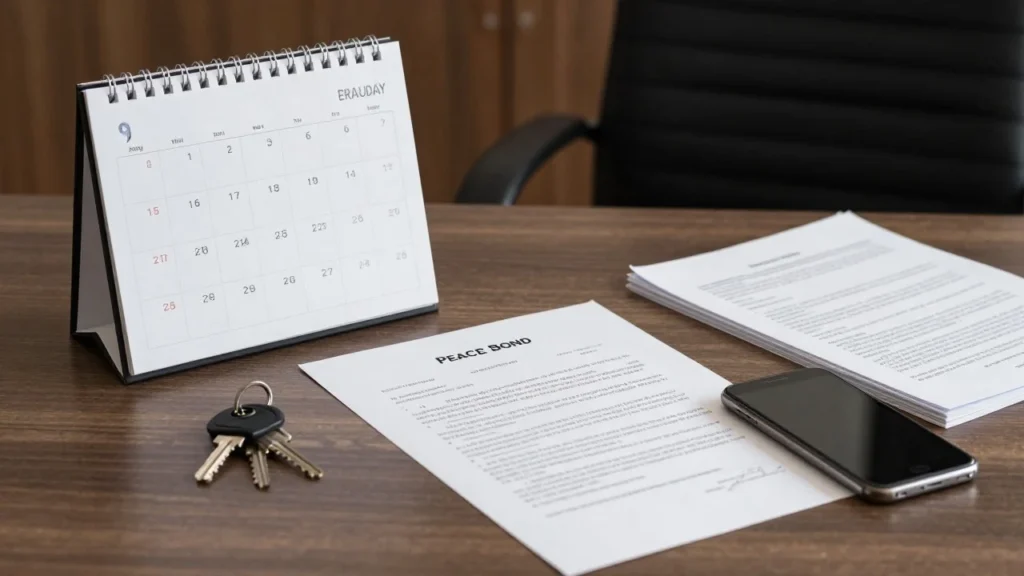
Parliament did not leave the weapons question to the parties. Before making the order, under section 810(3.1), the court has to weigh whether a firearms prohibition is desirable for anyone’s safety. If it decides that it is, it must add one. Then it goes further, at section 810(3.12). Where the court declines to add the condition, it has to put its reasons on the record.
That inverts the default. Refusing the weapons term is the exception a judge has to justify, not the starting point. Your firearms, ammunition, licence and registration certificates all go in, under the surrender rules at section 810(3.11). Expect to hand them over. If you want to go deeper, read How Long Can a Canadian Stay in the US.
For anyone whose work depends on a firearms licence, that single line can matter more than the twelve months.
What a peace bond does to record checks
There is no conviction, so a standard criminal record check comes back clean. The paperwork still travels. The Department of Justice Canada fact sheet on these orders, last revised in 2021, states that a copy is sent to the national RCMP headquarters. A record of it is also added to the Canadian Police Information Centre database, which police anywhere in Canada can search.
That entry is what surfaces on the deeper checks. While the order is live, many police services disclose it on a vulnerable sector check. That is the screening behind teaching, childcare, healthcare and a long list of volunteer roles. What happens after expiry depends on your local service, and some retain the entry for a further period before it drops away.
Most of these files stem from relationships and households rather than from strangers, so the fallout often lands in custody and access talks, too. Our family law coverage is relevant to this topic.
Crossing into the United States with one on file
Almost no page covers this, and it is the question that decides whether some people sign at all. A United States border officer decides admissibility under American law, not Canadian law, and Canadian rules about what counts as a conviction do not bind that officer. Border officers routinely ask whether you have ever been arrested or charged, and answering falsely is a serious problem in its own right.
Because the entry is in a police database rather than a criminal record, many Canadians with one of these orders cross without any difficulty. It is discretion, though, not a guarantee. If travel to the United States is essential to your job, raise it with your lawyer before you agree to anything, not after.
What happens to the bond money

The recognizance names an amount, with or without sureties, and it is a promise rather than a bill. In many files, nothing changes hands at all: you pledge a figure, say 1,000 CAD, and you pay nothing unless you break the terms. Where the court requires a cash deposit, it holds it.
Forfeiture is not a switch that flips the moment police charge you. Criminal Code section 771 sets out a separate process. A judge fixes a hearing, and the clerk sends you and any surety at least 10 days’ notice to show cause. The judge then has discretion to order forfeiture, refuse it, or land somewhere in between.
If the judge does order it, you and your sureties become judgment debtors of the Crown for the amount ordered. A deposit already sitting with the court moves across.
So the money is real. Losing it takes a second hearing and a second decision.
Sign it, or fight it?
Most people sign. You get the charge withdrawn, you keep a clean record, and you serve twelve quiet months, which beats a trial that could end in a conviction you carry for years.
Think harder before agreeing if any of these apply to you:
- Your job or your hunting depends on a firearms licence.
- Work takes you across the United States border.
- Permanent residence or a citizenship application is in play.
- Regular vulnerable sector screening is part of your role.
- The proposed no-contact term would separate you from your own children.
Ask for the exact wording before you agree, and ask whether the Crown will accept narrower terms. Section 810(4.1) allows either party to apply later to vary the conditions, so a term that ceases to apply is not permanent. If you want to talk it through with someone first, you can reach us through our contact page.
Frequently asked questions
No. There is no conviction and no finding of guilt, so nothing goes on your criminal record. A CPIC entry still exists, and deeper checks can detect it while the order runs.
Twelve months on the outside, under section 810(3). The court sets the term, and the order expires at its end. The other person can reapply if the fear persists.
A restraining order is issued by family court under provincial family legislation and usually involves people who have lived together. This one comes from criminal court under the Criminal Code and can be used against a neighbour, a co-worker, or anyone else.
Yes. Either the informant or the defendant can apply under section 810(4.1) to vary the terms. You need a reason the court will accept, and you should not simply ignore a condition while you wait.
You can refuse consent and proceed with the hearing, which is a real option when the evidence is thin. Refusing an order the court has already made is different, and section 810(3.01) allows up to 12 months in prison for that.