

Most people picture handcuffs and a permanent record. Reality is duller and cheaper. In almost every case, trespassing in Canada is a provincial regulatory offence, handled like a parking or speeding matter, and it ends in a fine. Criminal Code charges reach only a narrow slice of this conduct.
Each province sets its own rules, and the ceiling ranges from CA$500 in Nova Scotia to CA$25,000 for a repeat offender in Alberta. Where you stood matters as much as what you did. There is more on this in Quebec Bill.
Key takeaways
- Nine times out of ten, trespassing is a provincial ticket rather than a criminal charge, and it leaves no criminal record.
- Ontario caps the fine at CA$10,000. Nova Scotia still caps it at CA$500.
- Notice can be a sign, a fence, a spoken warning or a painted marker. None of it has to use the word “no”.
- An occupier may remove someone, but a citizen’s arrest under section 494 has strict limits and must be followed by a call to the police.
- Owners still owe a duty of care to the person who came on uninvited, so an injury on your land can still cost you.
Why this is provincial law, not the Criminal Code
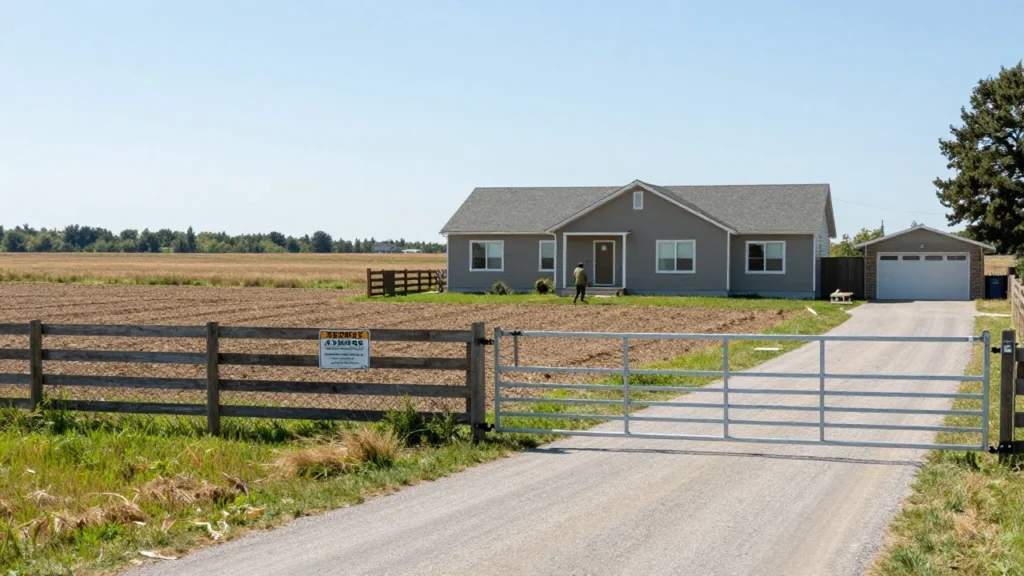
Trespass sits mainly in provincial property law. Every province.has a statute making it an offence to enter land after notice, or to stay after an occupier tells you to go. A conviction brings a fine under the provincial offences procedure. The police issue a ticket, a justice of the peace hears the case, and no criminal record is created.
Criminal Code charges do turn up, only rarely. Section 177 covers loitering or prowling at night near someone’s home. Break, mischief, and theft each cover conduct that goes well beyond standing where you should not stand. Those charges bring fingerprints and a record.
Maximum fines for trespass, province by province
Figures below come from each province’s own legislation. Read the last column closely. Two provinces name no amount at all, and their general penalty for provincial offences fills the gap.
| Province | Governing Act | Maximum fine | Notable feature |
|---|---|---|---|
| British Columbia | Trespass Act, RSBC 2018 | CA$2,000 | Its own text names no fine, so the Offence Act general penalty applies. |
| Alberta | Petty Trespass Act; Trespass to Premises Act | CA$10,000, rising to CA$25,000 later | Up to six months in jail, plus CA$200,000 for a corporation. |
| Saskatchewan | The Trespass to Property Act | CA$5,000, rising to CA$25,000 later | The defendant carries the onus of proving the occupier consented. |
| Manitoba | The Trespass Act | No amount in the Act | Renamed in 2021, when the same package cut the duty owed on farmland and wilderness. |
| Ontario | Trespass to Property Act | CA$10,000 | Red and yellow markings count as notice on their own. |
| Quebec | No stand-alone statute | Not applicable | Owners lean on the Civil Code and on suing for damages. |
| Nova Scotia | Protection of Property Act | CA$500 | Lowest ceiling in the country by a wide margin. |
| New Brunswick | Trespass Act, SNB 2012 | CA$1,100 to CA$10,200, by category | Entering a domestic violence shelter draws the top category. |
Ontario’s ceiling comes straight from the statute. The Trespass to Property Act, published on Ontario’s e-Laws site, sets a maximum fine of CA$10,000, a figure raised by a 2016 amendment. Another change in 2025 added aggravating factors, including staying more than 24 hours after a notice to leave.
Fines go to the province, never to the occupier. Anyone who wants money for a broken gate or a churned field sues for it separately. Smaller claims are handled through Ontario’s Small Claims Court process rather than the ticket court.
What counts as notice
Notice is the hinge of the offence. Without it, crossing open land is often lawful. With it, that same walk turns into an offence the moment you carry on.
- A sign. It must be clearly visible in daylight from every ordinary point of access. A picture of the banned activity with a line through it works as well as words.
- A fence or a wall. Enclosed ground carries notice by itself, with nothing posted anywhere.
- Cultivated ground. Ontario protects gardens, orchards, vineyards and young woodlots without a single sign.
- Spoken words. Staff saying “please leave” gives notice, and it binds you the second you hear it.
- Colour-coded markers. In Ontario, red markings mean no entry at all, and yellow markings mean entry is permitted only for certain activities. Every marking must be large enough to contain a circle ten centimetres across.
Substantial compliance counts, so a faded sign or a slightly small marker still does the job.
Removing someone, and the limits of a citizen’s arrest
An occupier can ask anyone to leave, at any moment, for almost any reason. Refusing is itself the offence. Occupiers, or people they authorize, may then use reasonable force to walk that person off the land. Reasonable means the least that works. Go past it, and the occupier becomes the one facing an assault charge. In addition to this, learn about Title Insurance, then visit this site.
Arrest is a different animal. O Ontario’s statute allows an occupier or an authorized person to arrest without a warrant, though only for someone they find on the premises in breach of section 2. They must then call police promptly and hand the person over. Section 494 of the Criminal Code is narrower still. It applies to a person found committing an indictable offence, or to someone the property owner finds committing a criminal offence on that property. Even then, police must take custody forthwith.
Guards and shopkeepers get this wrong all the time. Arresting on a hunch, or holding somebody for an hour while a cruiser crawls across town, invites a claim for false imprisonment. Phoning police and keeping your distance is almost always the safer play.
When trespassing turns into a criminal charge

Night changes everything. According to the Department of Justice, under section 177 of the Criminal Code, loitering or prowling at night near another person’s dwelling-house is an offence punishable on summary conviction. Parliament last amended that wording in 2018. Your same stroll at two in the afternoon stays a provincial matter.
Two other charges do the heavy lifting. Break covers going into a place to commit an offence once inside. Mischief covers the damage. Neither one needs a sign or a warning first, and both leave a criminal record behind.
Suing in civil court: trespass as a tort
Its oldest branch owes nothing to regulators. Trespass to land is a tort, and it is actionable without proof of loss. An occupier who shows you came on without permission wins in principle, even where nothing broke.
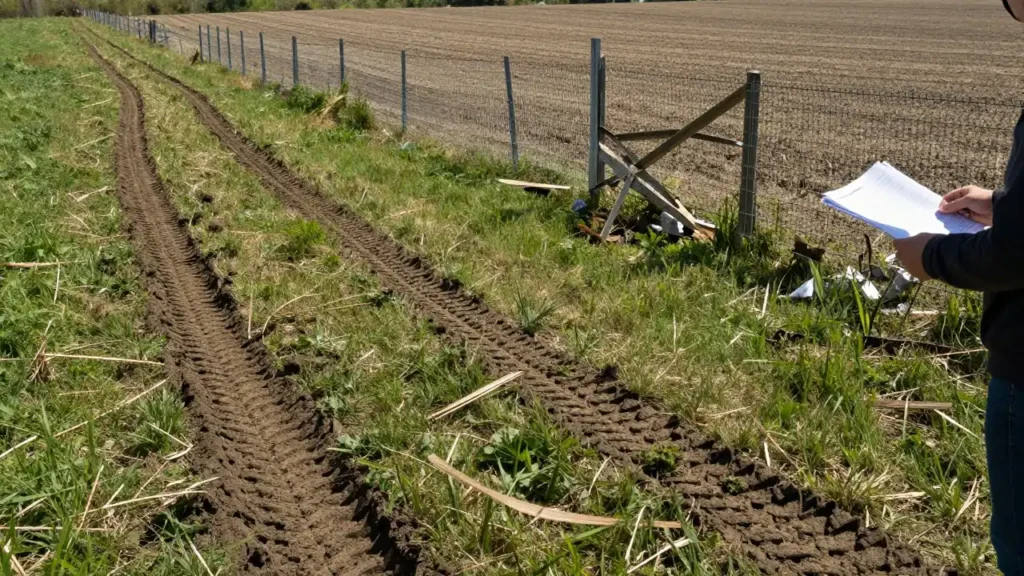
Damages usually track the real harm: a rutted lawn, a cut fence, a lost crop. Courts award more where the conduct was deliberate or repeated. In Ontario, a conviction under the provincial Act also lets the court order damages in addition to the fine. That section sets no dollar limit on the award.
What an occupier owes a trespasser

Occupiers’ liability does not stop at the property line. Provincial statutes cut the duty owed to someone who enters uninvited, usually to a duty not to create a danger deliberately and not to act with reckless disregard. Manitoba narrowed it again in 2021 for farmland, wilderness and trails. Yet the duty never vanishes. A child hurt on rotten stairs or in an unfenced pool can still bring an injury claim against the occupier.
Getting advice on a charge
Rules shift at every provincial border. A minor charge can still result in a written ban from a store, campus, or workplace. If the details matter to your own situation, contact Lawverra for advice well before the court date. If you want to go deeper, read Travel Consent Form for Minor PDF.
Frequently asked questions
No, not on its own. Provincial convictions are regulatory, so they do not create a criminal record. A Criminal Code charge, such as break or the night-time offence in section 177, is a different story.
In several provinces, yes. Cultivated land and fenced ground carry notice on their own, so nobody has to post anything first.
Ontario allows a period of six months from the date of the offence under its provincial offence procedure. Its separate farm and agri-food statute allows two years.
Only in narrow circumstances. A guard authorized by the occupier may arrest a person found on the premises in breach of the Act. That guard must call the police promptly and hand you over.
Alberta and Saskatchewan both reach CA$25,000 for a later offence, and a corporation there can face a CA$200,000 penalty. Ontario’s farm and agri-food statute carries a CA$15,000 fine for a first offence and CA$25,000 thereafter.